
How Lithium Battery Energy Storage Systems Work
Have you ever wondered what happens when you plug in a home battery system or a large-scale energy storage unit? The process is actually quite fascinating, and it’s transforming the way we generate, store, and use electricity. Let me walk you through how lithium battery energy storage works — from charging to discharging — in plain, human terms.
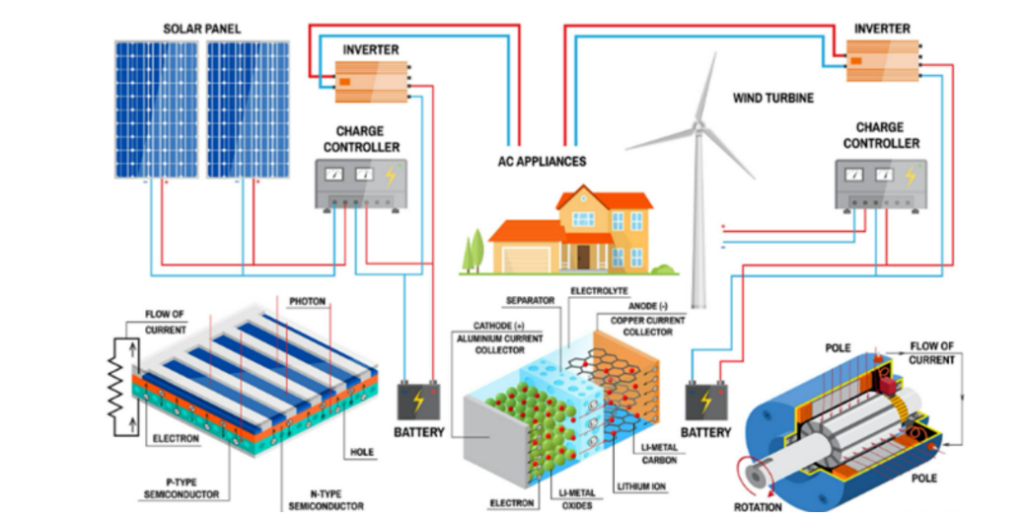
What Exactly Is a Lithium Battery Energy Storage System?
Think of a lithium battery energy storage system as a giant, rechargeable energy warehouse. When electricity is plentiful and cheap, you store it. When demand spikes or the power goes out, you release it. Whether you’re powering a single home, a business, or even supporting the entire power grid, these systems provide reliable, on-demand energy.
The whole process is essentially a two-way conversation between electrical energy and chemical energy. And at the heart of most modern systems is the LiFePO4 battery — a type of lithium battery that’s become the gold standard for energy storage thanks to its safety, long cycle life, and falling costs.
How Does a Lithium Battery Energy Storage System Work?
The operating principle can be broken down into three simple stages: charging → storing → discharging. But behind this straightforward sequence, several critical components work together seamlessly.
Stage 1: Charging — Capturing Energy
When external power is available — whether from the grid, solar panels, wind turbines, or a diesel generator — the system begins charging.
Here’s the catch: most external sources produce alternating current (AC), but lithium batteries can only store direct current (DC). That’s where the power conversion system (PCS) comes in. It acts as a translator, converting AC to DC so the battery can absorb the energy.
Once the DC electricity enters the battery pack, a chemical reaction takes place inside. Lithium ions migrate between the positive and negative electrodes, and electrical energy is converted into chemical energy for storage.
Stage 2: Storage — Keeping Energy Safe
After charging, the battery enters a storage state. Externally, nothing seems to be happening. But internally, the electricity has been safely transformed into stable chemical energy.
This is where the Battery Management System (BMS) becomes your silent guardian. It continuously monitors:
-
Voltage and current
-
Cell temperature
-
State of charge (SOC)
-
State of health (SOH)
-
Insulation status
-
Cell consistency
If anything goes wrong — overcharging, over-discharging, overheating, or cell imbalance — the BMS immediately steps in to protect the system. Meanwhile, thermal management, fire suppression, and liquid cooling systems work around the clock to ensure everything stays safe.
Stage 3: Discharging — Releasing Stored Energy
When you need power — or when the Energy Management System (EMS) gives the signal — the system begins discharging.
This is basically the reverse of charging:
-
A reverse chemical reaction occurs inside the battery
-
Chemical energy is converted back into DC electricity
-
The PCS converts DC back to AC
-
Power flows to your appliances or the grid
And just like that, the energy you stored earlier is ready to use.
The Core Components of an Energy Storage Lithium Battery System
A complete lithium battery energy storage system is made up of several subsystems, all working in harmony.
1. Battery System — The Storage Heart
This is where the energy actually lives. The structure typically goes: cell → module → pack → rack → battery container. Most systems today use LiFePO4 batteries, and for good reason: they offer long cycle life, excellent thermal stability, superior safety, and declining costs that make them ideal for large-scale storage.
2. Battery Management System (BMS) — The Safety Guardian
The BMS is the system’s watchdog. It monitors battery status, estimates SOC and SOH, balances cells, and triggers alarms when needed. By preventing overcharge, over-discharge, short circuits, and thermal runaway, it dramatically extends the life and reliability of your energy storage lithium battery.
3. Power Conversion System (PCS) — The Heart
The PCS handles the AC/DC conversion — both ways. It also manages power regulation, grid connection and disconnection, voltage and frequency control, and reactive power compensation. Think of it as the interpreter that lets the battery communicate with the outside world.
4. Energy Management System (EMS) — The Brain
If the BMS is the guardian and the PCS is the heart, the EMS is the brain. It decides when to charge, when to discharge, how much, and whether to participate in grid dispatch. By analyzing electricity prices, load demands, battery status, and grid signals, the EMS issues real-time commands to keep the system running at peak efficiency.
How Different Scenarios Use Energy Storage
The working principle is the same everywhere, but different applications have different strategies.
Grid-Side Energy Storage
For the public power system, grid storage helps:
-
Discharge during peak hours to relieve grid stress
-
Charge during off-peak hours to improve efficiency
-
Participate in frequency regulation, voltage support, and reserve capacity
The goal? Greater grid stability and better integration of renewable energy
Commercial and Industrial Energy Storage
For businesses, it’s all about cutting costs. Typical strategies include:
-
Charging during low-cost off-peak hours
-
Discharging during expensive peak hours
-
Reducing demand charges
-
Providing UPS backup during outages
Through peak-valley arbitrage, businesses can save significantly on electricity bills.
Home Energy Storage
Home systems often pair with rooftop solar. During the day, solar panels power the home and charge the battery with any excess. At night, the battery takes over. And during a blackout, the system automatically switches to off-grid mode to keep essential appliances running.
The Future of Lithium Battery Energy Storage
The global energy storage market is growing at an incredible pace. As wind and solar capacity expands, energy storage has become essential infrastructure.
Right now, LiFePO4 lithium batteries dominate the market, thanks to their safety, longevity, and mature supply chains. Looking ahead, we can expect even larger cell capacities, wider adoption of liquid cooling, smarter BMS and EMS technologies, and new battery chemistries like sodium-ion entering the mix.
Today’s lithium battery energy storage systems already achieve round-trip efficiencies of 85% to 95%, with fast response times, flexible deployment, and low maintenance costs. And as technology continues to advance, these systems will play an increasingly vital role in homes, businesses, grids, and microgrids — becoming an indispensable part of our future smart energy infrastructure.
Final Thoughts
Whether you’re a homeowner looking to cut energy bills, a business owner seeking backup power, or a utility provider stabilizing the grid, understanding how lithium battery energy storage works is the first step. The technology is proven, the benefits are real, and the future is bright.
If you’re considering an energy storage solution, take the time to learn about the different components, compare options, and choose a system that fits your needs. And remember — at the core of it all, it’s just electricity having a conversation with chemistry.